
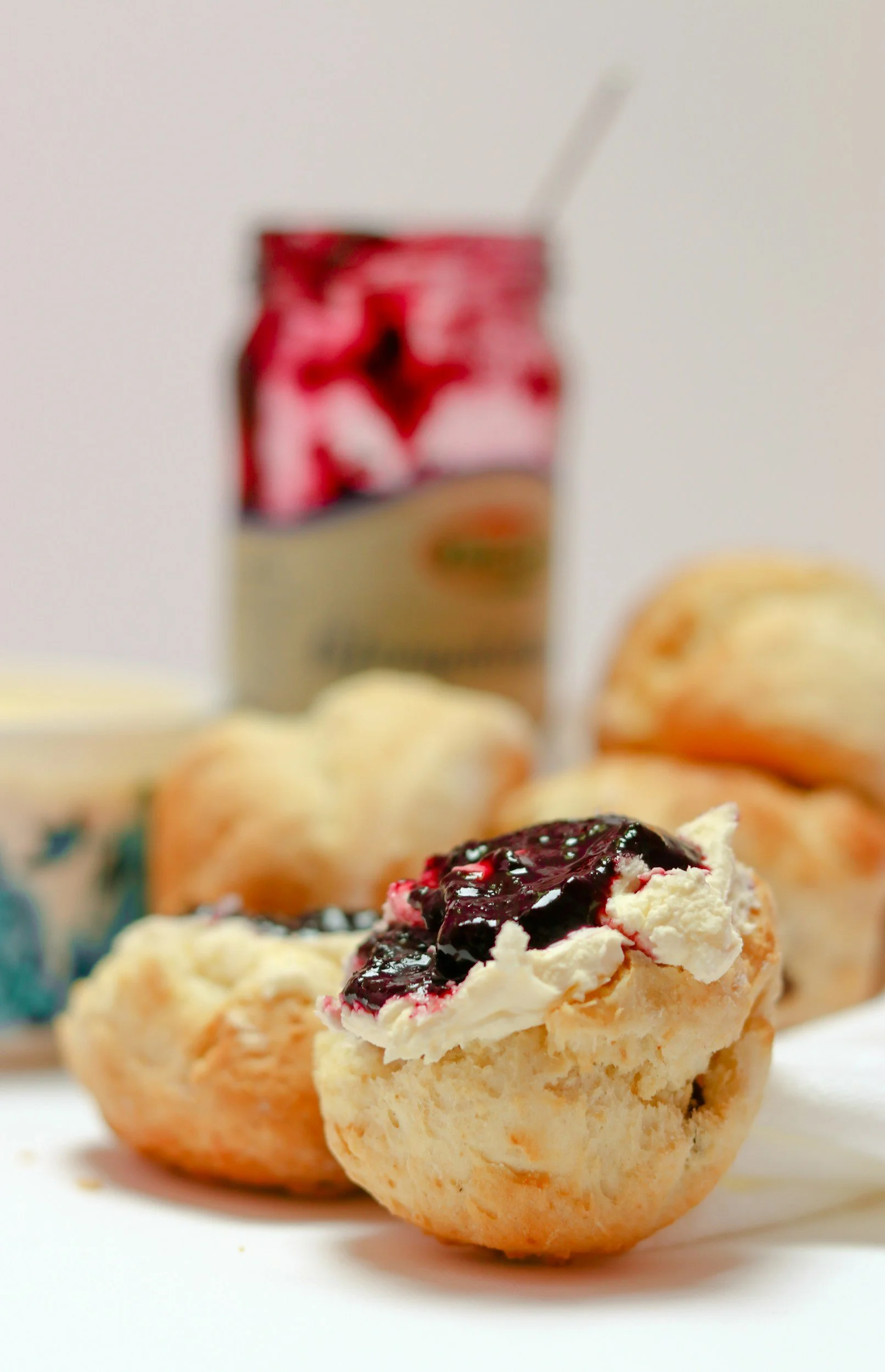
Self-raising flour is plain flour with the rise already built in. The base is the same blend as our plain flour: tapioca starch, maize starch, rice flour, soy flour and dietary fibre. Three raising agents are added on top, and knowing what they do explains nearly every tip in this post.
What the numbers on the label mean
500 (sodium bicarbonate) and 501 (potassium carbonate) are alkalis.
575 (glucono delta-lactone, or GDL) is a gentle acid.
When liquid hits the flour, the acid and alkalis start reacting and release carbon dioxide. The oven's heat speeds that up. Those bubbles are your rise.
In wheat baking, gluten stretches around the bubbles and holds them. Here, the starches, soy protein and fibre set around them as the bake cooks.
What that means in your kitchen
Timing matters more than mixing. The rise starts as soon as the liquid goes in. Unlike a plain-flour batter, a self-raising batter shouldn't sit on the bench. Mix it and get it in the oven.
Overmixing works differently here. In wheat baking, overmixing makes things tough. With gluten-free there's no gluten to toughen, but overmixing knocks out the bubbles that have already formed. Mix until just combined and stop.
Heat the oven fully first. A hot oven sets the structure quickly around the bubbles.
Converting a recipe? If it calls for plain flour plus baking powder, use self-raising flour and leave the baking powder out.
Keep the door shut. Give cakes at least two-thirds of their baking time before you peek.
Store it sealed. Raising agents lose strength in humid air. Keep the bag closed, in a cool, dry spot.
Recipe: Gluten-Free Lemonade Scones
Lemonade scones are a very Australian recipe and one of the most forgiving. The fizz adds lift, the sugar helps browning, and the cream brings richness without rubbing in butter.
Ingredients
320g Outback Harvest Gluten-Free Self-Raising Flour, plus extra for dusting
1 tbsp caster sugar
Pinch of salt
125ml thickened cream, cold
140ml lemonade, cold (regular, not diet)
Milk, for brushing
Method
Heat the oven to 220°C fan-forced. Line a tray with baking paper.
Mix the flour, sugar and salt in a bowl and make a well in the centre.
Pour in the cream and lemonade. Stir with a butter knife until a soft dough forms.
Turn the dough onto a lightly floured bench. Knead it gently for 20 to 30 seconds, just until smooth. If it feels too soft, work in a little more flour.
Pat the dough out to about 3cm thick.
Cut rounds by pressing the cutter straight down. Don't twist it: twisting seals the edges and stops the rise.
Place the scones on the tray about 2cm apart. Brush the tops with milk.
Bake for 12 to 15 minutes, until golden on top and underneath.
For soft tops, cover them with a clean tea towel straight out of the oven.
Makes about 10.
Where else to use it
Muffins, cakes, sponges, Swiss rolls, pancakes, pikelets, crumpets, pizza bases, doughnuts, steamed puddings and fish batter.
For biscuits, pastry and sauces, use our Gluten-Free Plain Flour.
Available in 5kg and 10kg bags, delivered Australia-wide: SHOP NOW