

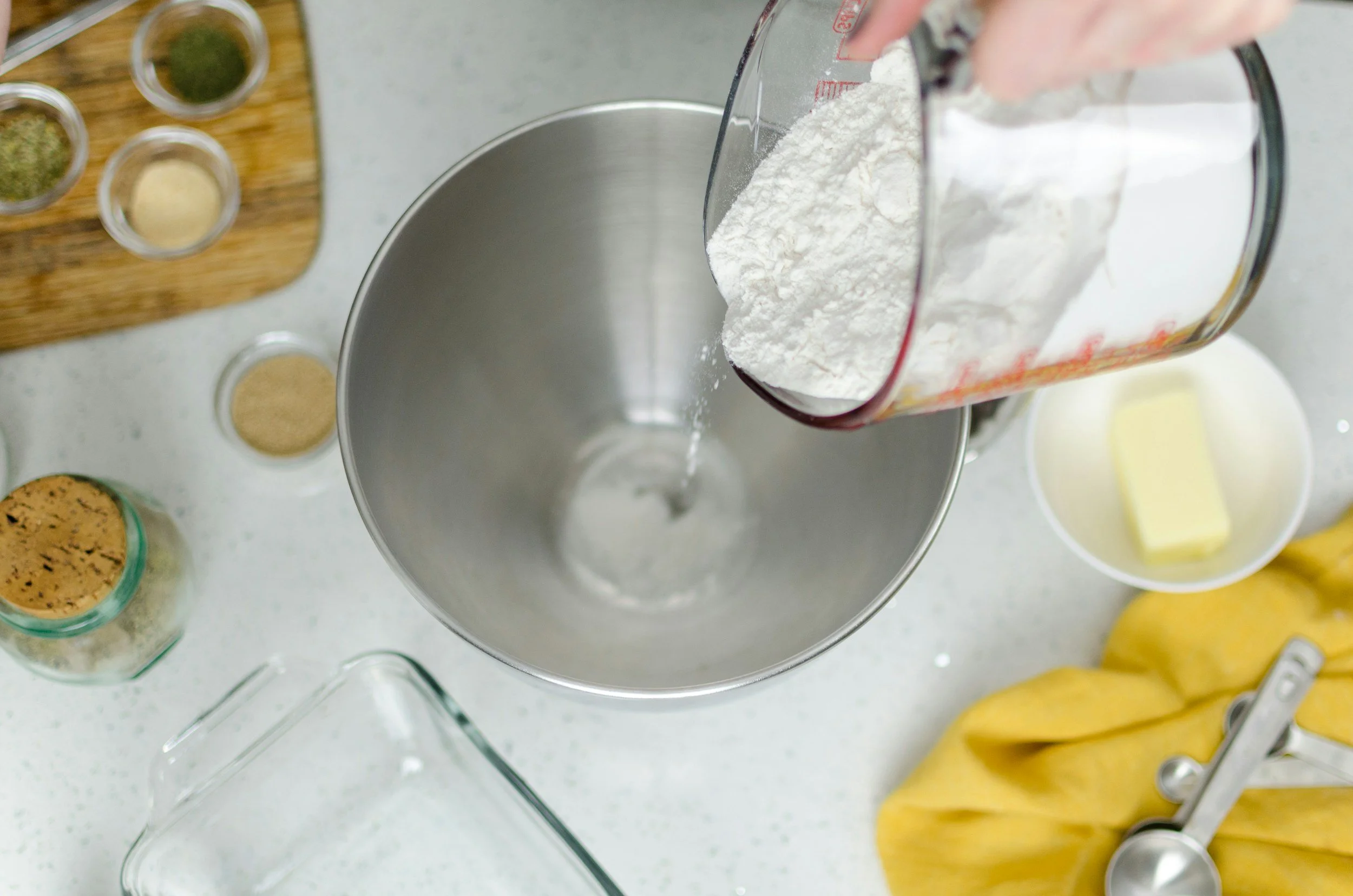
Here's the good news most gluten-free bakers find out late: most of what you bake with plain flour never needed much gluten in the first place.
Gluten is the protein network that forms when wheat flour meets water and gets worked. It's stretchy and elastic, which is exactly what bread needs. In a cake, a biscuit or a crumble, gluten is usually the problem. It's the reason for tough muffins and chewy shortbread, and the reason recipes tell you "don't overmix."
So for the everyday stuff, a well-built gluten-free plain flour gets you very close, as long as you understand what's in it.
What's in the bag
Our Gluten-Free Plain Flour has five ingredients, and each one has a job:
Tapioca starch binds the mix and gives crisp edges and a little chew.
Maize starch keeps the crumb soft and tender, and thickens sauces.
Rice flour gives body and structure.
Soy flour adds protein, which helps bakes hold their shape and brown evenly.
Dietary fibre holds on to moisture, so bakes don't dry out by day two.
No wheat, no gluten (gluten not detected), and nothing from animals, so it suits vegan baking too. It does contain soy, so skip it if soy is a problem in your house.
Swap it 1:1, by weight
The flour is designed as a straight replacement for plain wheat flour. If a recipe calls for 250g of flour, use 250g.
Weigh it rather than using cups. Gluten-free flours pack differently from wheat, and a cup of one can weigh noticeably more than a cup of another. A $15 kitchen scale will do more for your baking than any other change.
Five habits that make the difference
Rest your batters. Pancake, crepe and batter mixes improve with 15 to 20 minutes on the bench. The starches soak up the liquid and the texture turns smoother.
Loosen if needed. Fibre and starch absorb more liquid than wheat. If a batter looks stiffer than you're used to, add a splash more milk.
Keep pastry cold. Gluten-free pastry is softer and more fragile when warm. Chill the dough for 20 minutes and roll it between two sheets of baking paper.
Thicken in stages. When making gravy, white sauce or custard, the starches thicken fast. Whisk the flour into cold liquid first, or cook it in butter as a roux, then add the rest gradually until it's where you want it.
Store it sealed. Keep the bag closed in a cool, dry cupboard, away from the stove and dishwasher steam.
Recipe: Three-Ingredient Shortbread
Shortbread is the best first test for any gluten-free plain flour. It relies on butter, sugar and a short, crumbly texture, which is exactly what you get when there's no gluten.
Ingredients
200g unsalted butter, softened
100g caster sugar
300g Outback Harvest Gluten-Free Plain Flour
Pinch of salt
Method
Heat the oven to 150°C fan-forced. Line a 20cm square tin with baking paper.
Beat the butter and sugar until pale and smooth.
Add the flour and salt. Mix until it just comes together into a soft dough.
Press evenly into the tin and prick all over with a fork.
Chill for 20 minutes.
Bake for 35 to 40 minutes, until pale gold at the edges.
Cut into fingers while still warm, then leave to cool completely in the tin before lifting out.
Where else to use it
Biscuits, cakes, pastry, pancakes, crepes, batters, fresh pasta, custard, and as a thickener in soups, stews, sauces and gravies.
For anything that needs to rise, use our Gluten-Free Self-Raising Flour. For yeasted bread, use our Traditional Bread Flour.
Available in 5kg and 10kg bags, delivered Australia-wide: SHOP NOW